How to read water and weather, control depth and choose flies so a deliberate retrieve stays in front of trout on our lakes and reservoirs.
Stillwater trout in the UK do not always want a fly ripped past them. There are stretches of the year and kinds of days when a patient retrieve can turn hesitant interest into solid takes. The trick is knowing when to engage that slower mode and how to rig so the fly lingers where fish are actually feeding.
A quick test: are conditions asking for slow?
Think slow when trout are present but not racing around. Three common UK signals:
- Water and weather: late-winter into early spring cold, autumn cool-downs and brief cold snaps in otherwise mild spells often stall fish. Unsettled, squally days or a light stain in the water push the odds toward a slower pull.
- Fish behaviour: half-hearted follows, gentle plucks, or bow-waves that fade rather than chase are classic hints that trout want an easy catch, not a sprint.
- Food picture: when fry-chasing is scarce and the menu leans on shrimp, damsels and buzzers, a fly that creeps and hovers is the better bet.
Use speed to search at first. As soon as you get clues - a show, a line tap, a follower - switch into patient mode to keep the fly in the killing zone for longer.
Depth first: hold your lane
Slow only works if the fly stays at a useful level instead of yo-yoing. Prioritise depth control before thinking about patterns.
- Intermediate line: a clear or camo intermediate is the workhorse for deliberate pulls. It gets below surface clutter and lets you nurse the fly along at a chosen depth without spooking fish.
- Floating line: ideal when you want small nymphs or buzzers high in the column, especially over the tops of weed or in calm pockets.
- Fast sinkers: they have a place when trout are parked deep and subdued, but they fight a truly unhurried retrieve. Save them for those specific days rather than defaulting to them.
Whatever you choose, build a simple countdown after the cast and watch the line angle. If the line starts to belly downwards you are sinking past the action; if it drifts flat and lifeless you may be too high.
Where a slow fly earns its keep
Patient retrieves shine where trout can feed without chasing. On many UK stillwaters that means areas with structure and cover that hold slower prey: the edges and tops of weed beds, the lips of channels, the mouths of bays, gentle points and low humps. Much of this water is within the top few metres and often within comfortable bank-casting range.
Season and conditions shuffle the deck:
- Early in the year, with little weed up, skinny water often draws fish. Start higher in the column and closer to the bank before expanding your search.
- As light and temperature build through a day, expect fish to slide off the margins. In summer, they may browse shallow during low light and sit deeper through bright hours. Focus on feeding areas with quick access to cooler, deeper water when the edges turn uncomfortable.
Flies that look alive between pulls
For slow presentations, pick patterns that keep working even when you barely move them.
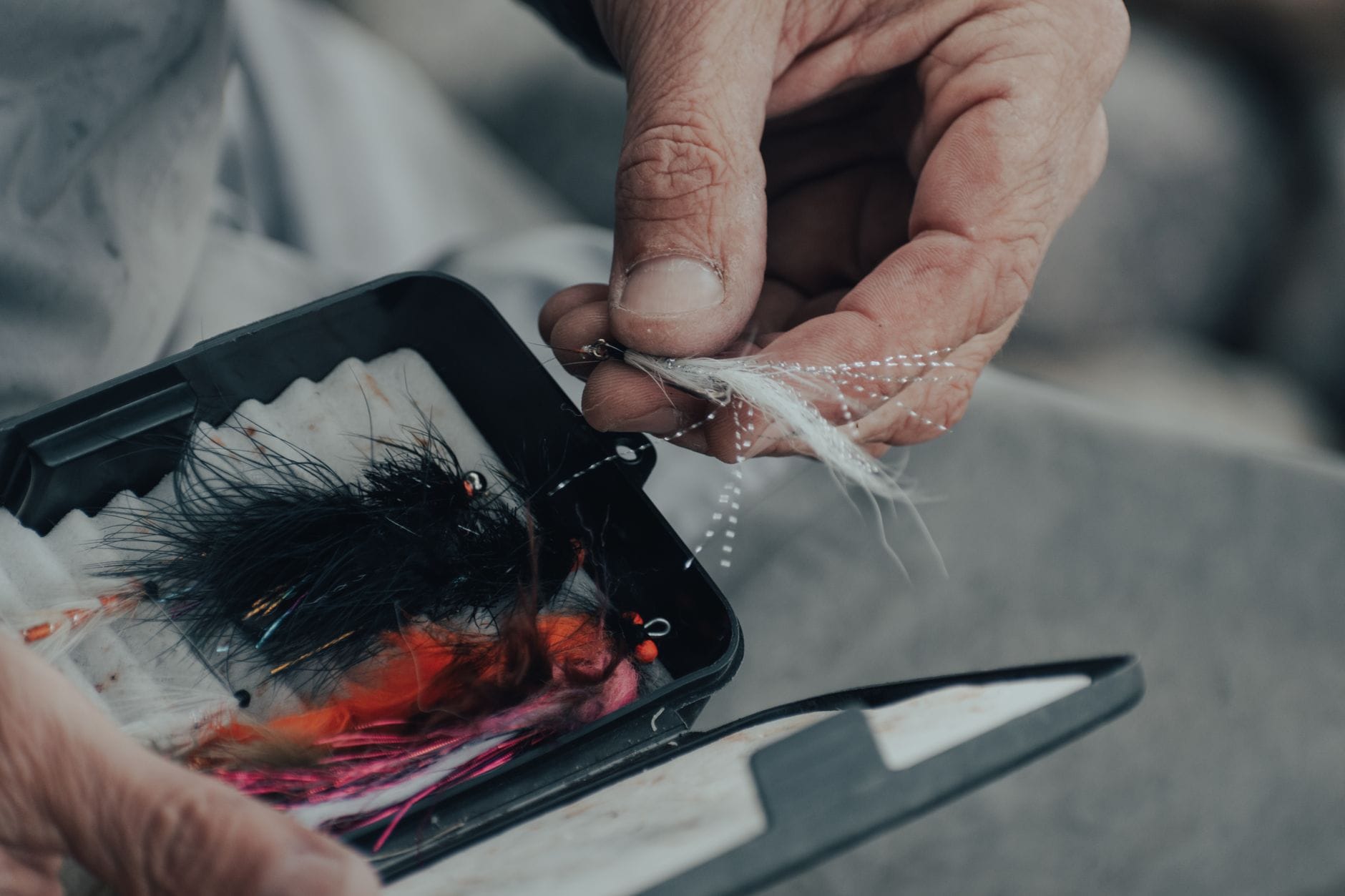
- Movement materials: soft fibres that pulse and breathe sell the illusion without speed.
- Buoyancy and ballast: near-neutral flies that settle slowly or hover let you pause without crashing out of the zone. A small pinch of weight near the head can add a tiny lurch when you tighten, then the fly settles again.
- Size and colour: finger-joint sizes are reliable stillwater mouthfuls, roughly 2.5 to 6 cm. Natural, subdued shades are the day-to-day choice. A touch of orange can be worth a try around spawning periods, depending on venue rules and clarity.
How to fish it on the day
- Cadence: start slower than feels natural. Mix short draws with genuine pauses long enough for the fly to hang. Many takes show as the briefest line tick or slack rather than a slam.
- Adjustments: if you get interest but no hook-ups, extend the pauses or drop an extra second or two before starting the retrieve. If you keep bumping weed or feel dead weight, shorten the countdown or step to a floating line. If you never touch anything, add time or move to the intermediate.
- Two flies if allowed: pairing a larger, leechy profile with a smaller buzzer or shrimp above can show two food items at once. Always check fishery rules on the number of flies.
- Bank craft: use the wind. A gentle cross-wind lets you drift the line and inch the fly along rather than strip it. Angle casts so the fly tracks across the face of likely water - along the edge of weed or across the lip of a drop - and it will stay in view longer.
When to put pace back in
If trout are obviously smashing fry, bow-waving after fast retrieves or the water clears and brightens with fish cruising high and alert, speed up and cover ground. Slow is a deliberate setting for the right days, not a rule to fish by every time.
Pick your moments, control depth, and choose flies that keep selling the cheat-meal story while you pause. Do that, and patient retrieves become a reliable problem-solver on UK lakes and reservoirs.
Find out more
- Fly lines: an overview of all types and when to use them • FlyFish Circle — A clear, practical overview of fly‑line types (floating, intermediate, sinktips and full sinking), sink rates and when to use each — helpful for choosing the intermediate or slow‑sink line the article recommends.
- Habitat Improvement — Wild Trout Trust guidance (habitat improvement) on how marginal and weedbed structure holds trout — useful background for picking the edges and weed tops where slow retrieves pay off.
- The river close season is in place now, but can you still go fishing? Yes! Find out what's still allowed and where to go - Angling Trust — Angling Trust advice on close seasons, local byelaws and where/when you can fish — handy for checking rules at your venue (including restrictions on flies and methods).
- Understanding the Chironomid Life Cycle in Trout Diets - Anchored Outdoors — A practical primer on chironomid (buzzer) life stages and ecology — helps you understand the food the article mentions and choose appropriate buzzer/chironomid patterns and presentations.
Image: Photo: Gaspar Zaldo / Pexels