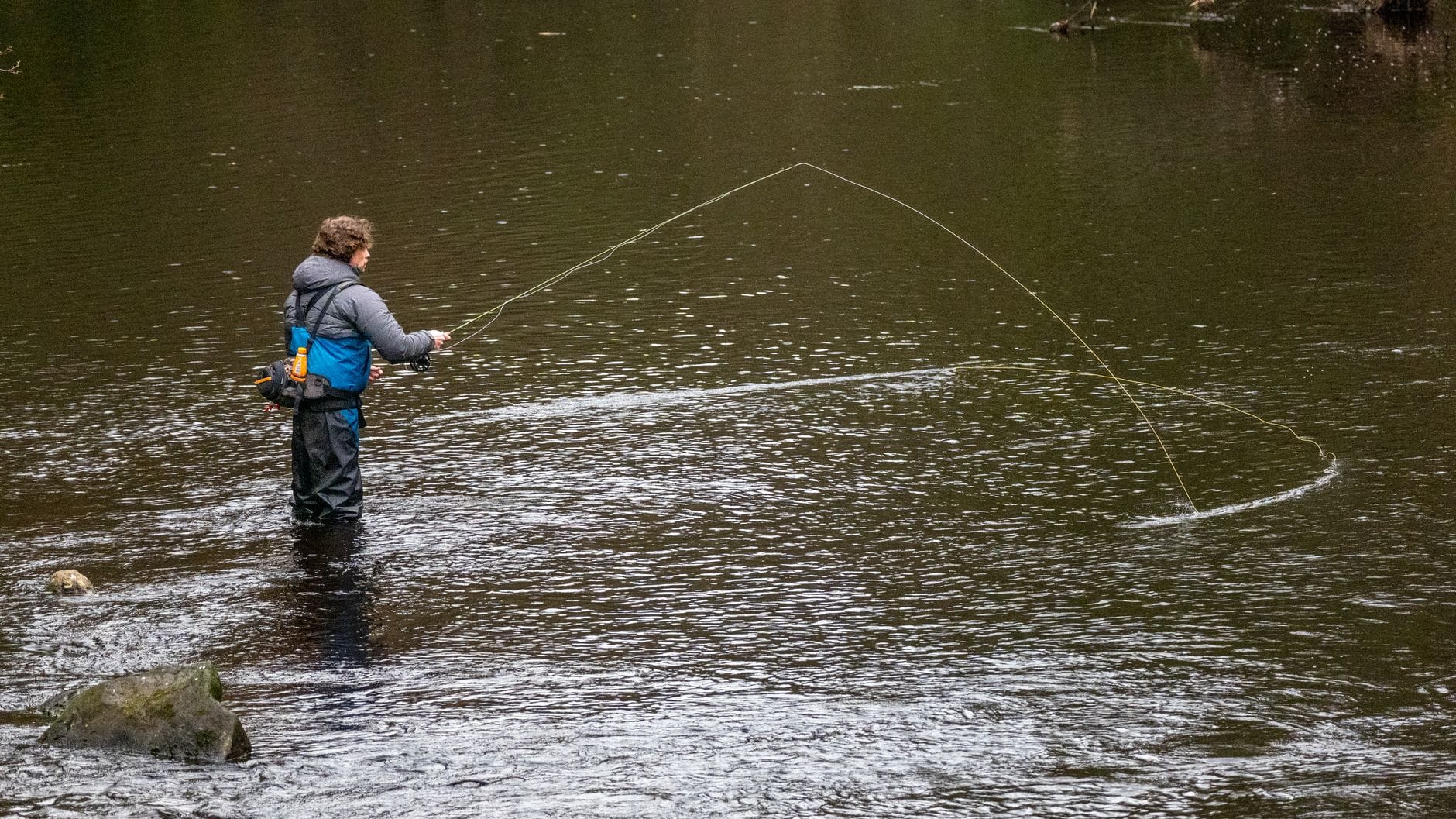
A safety-first guide to timing, water choice and fly delivery so you can keep catching legally and responsibly when spates surge or summer flows vanish.
Start with triage: is it fishable and safe?
Big rises and skinny trickles are part of UK river life. Before thinking about tactics, decide if today is a go or a no. Rising water is unpredictable and can climb faster than you expect. If you feel pressure to wade deeper to reach fish, step back instead. In warm, shrunken flows, consider fish welfare from the outset and be ready to stop.
Spates: make the most of short windows
- Time the first moves of a rise. If it is safe and the water still has decent visibility, the opening phase of a spate often fishes best, before colour and volume peak.
- Look for slack pockets within the main flow rather than assuming every trout hugs the bank. Eddies behind rocks, dips in the bed and the soft side of a seam can all hold fish even in heavy water.
- Precision beats reach. Short-range deliveries that keep thin leader off the surface help you hold a fly in a narrow lane long enough for a trout to see it. A tight-line approach with the rod held high gives more control than long casts in turbulent water.
Keep patterns simple and obvious in coloured flows. Bulky nymphs with a bright feature or a compact jig-style streamer are easy for trout to track in turbulent water.
Holding depth without constant snagging
When depth and push make normal nymphing ineffective, an anchor-below-the-flies setup can help. Place the weight at the very end of the tippet and tie flies on short side tags above it. This keeps the flies riding just off the stones and reduces hang-ups while you maintain bottom contact. Always check local byelaws and fishery rules before using any rig that puts weight below the fly.
If the main stem is unfishable, change the venue
Big rivers with colour and dangerous flow are a cue to walk. Braided reaches, islands and floodplain tributaries often spread out the energy and hold clearer, softer water. Expect long walks followed by very short presentations under the rod tip. A longer, light-line rod makes bow-and-arrow or gentle tension casts easier in tight cover.
On small streams in early spring spates, a late-morning to afternoon lift in temperature can switch fish on. A simple stream thermometer helps you judge when that window opens.
Low and clear: stealth before anything else
In thin, bright water it is movement that gives you away. Slow down, stay low, and settle into position before you cast so fish relax again. Make the first cast count and avoid unnecessary false casts.
For pick-ups, aim for silence. Treat line and leader with a small amount of grease so they sit high, strip out slack before you lift, then come off the water smoothly to avoid wakes.
Leaders for skinny water
Push the fly line away from the fish by lengthening your leader. You can extend a shop-bought leader with a thicker butt section, or build your own with a long, firm butt, a brief transition and a fine tippet. Adjust proportions to suit fly size and wind. Think longer than usual, often beyond a rod length and a half, so the line lands well back from the target.
Fish welfare, legality and good judgment
- In warm, depleted flows, stop if fish are slow to recover. Cooler autumn nights can improve conditions even when levels remain low.
- In spates, no fish is worth a risky step. If visibility, footing or flow raise doubts, switch to safer side channels or call it a day.
- Check local rules before adding weight below flies, fishing multiple droppers or using heavy jig heads. There is nearly always a legal alternative that still gives you depth and speed control.
Quick cues to save the session
- Early spate with some clarity: focus on small soft lanes beside fast water. Short drifts, big control.
- Main river unsafe or chocolate: walk to braids, islands and floodplain tributaries. Expect close-range, under-tip deliveries.
- Water low and bright: slow your approach, keep pick-ups quiet and lengthen the leader so the line lands well away from the fish.
Read what the river is doing today, shrink your target to the water a trout can actually hold in, and match your presentation to that slice. That mindset keeps you in the game when levels are at their most awkward.
Find out more
- Check for flooding - GOV.UK — Official GOV.UK ‘Check for flooding’ service — view current flood warnings and alerts, river/sea/groundwater and rainfall levels, and the five‑day flood risk to help judge whether a river is fishable and to find Floodline contact details.
- RNLI sea safety: Know the risks in and beside the water — RNLI water‑safety guidance — practical advice on staying safe in and beside open water, including wading risks, using flotation, reading local hazards and ‘Float to Live’ guidance for anglers working around fast or high flows.
- Fishing during hot weather: essential advice — Angling Trust: Fishing during hot weather — targeted fish‑welfare guidance for anglers in drought/heat conditions, with temperature and oxygen cautions, steps to minimise stress and advice on safe catch‑and‑release during warm, low flows.
- Catch and Release — Wild Trout Trust: Catch and Release — best‑practice guidance for releasing wild brown and sea trout safely, focusing on techniques that reduce harm and improve post‑release survival in vulnerable low‑flow or warm conditions.
Image: Photo: Mike Norris / Pexels